

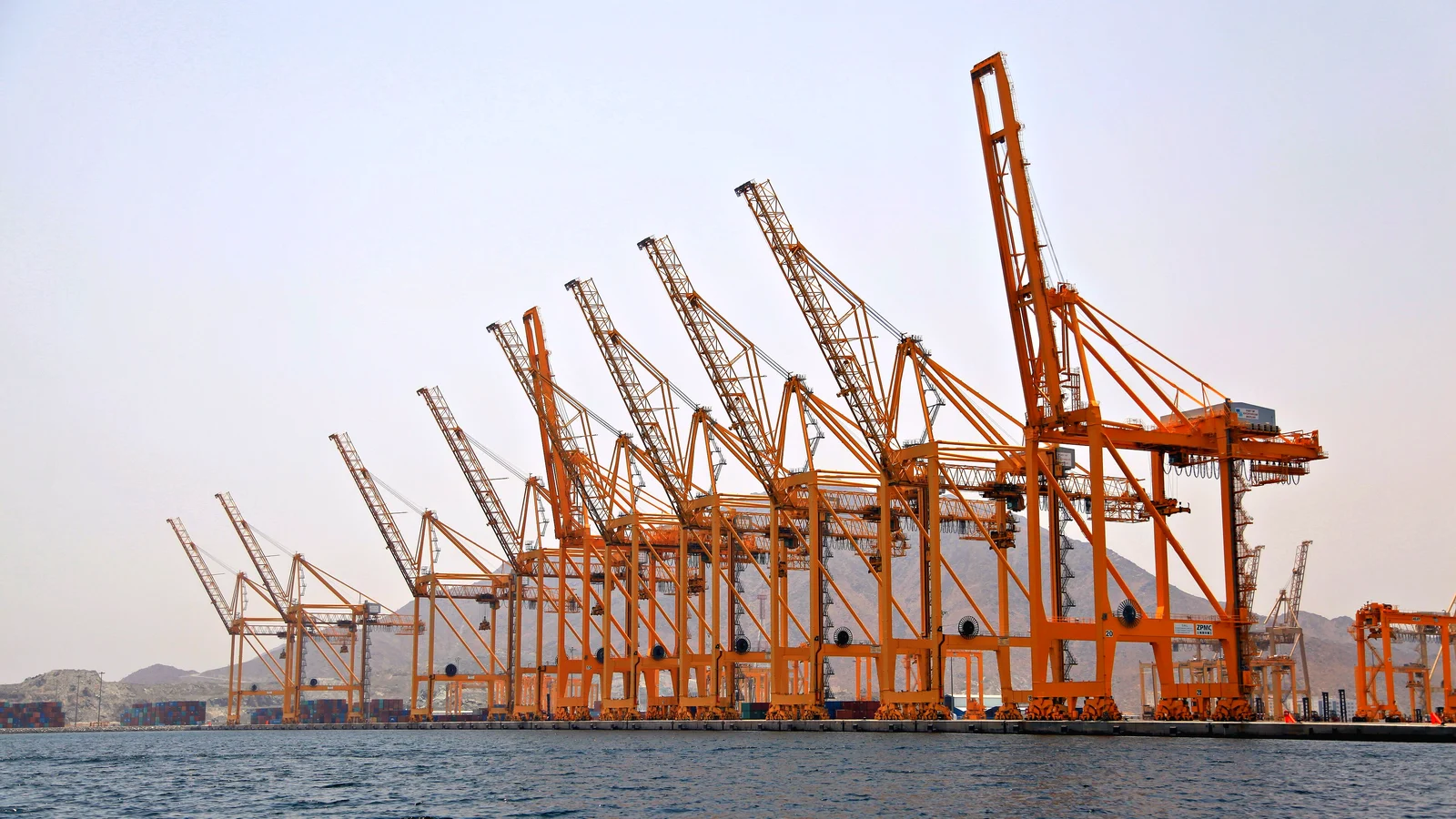
Singapore’s Maritime and Port Authority says the container ship GFS Pride was sailing through the Strait of Hormuz on 13 October when a projectile hit it. The ship caught fire and sank, and all 21 crew were evacuated, Marine Insight reported. Strait of Hormuz container shipping was already thin before the sinking.
Who fired in this Hormuz container ship attack is not settled. Iran’s Revolutionary Guard said the ship hit a naval mine on an “illegal and dangerous route”. The UK Maritime Trade Operations centre suggested unidentified projectiles, The Guardian reported. Marine Insight adds that the security firm MARISKS saw no independent evidence of a mine. The Guardian’s own headline says two container ships sank, but its second ship is the bulk carrier Cape Dao, hit on 23 September. A second Singapore-registered ship, GFS Giselle, took hull damage and reached anchorage under its own power, Container News reported, with all 22 crew safe. MPA dates that hit 14 October and Atlantic Pacific says 13 October. Atlantic Pacific counts four container ships struck between 11 and 13 October, and reports a navigational warning with containers floating near Ras Shaykh Masud. None of the pages I read says what the boxes held or who owned them.
Who still sails there
Jayendu Krishna, a director at Drewry, told CNBC that no major container line has resumed Strait of Hormuz container shipping services since suspending them when the war began in February. Some regional operators run sporadic services, generally with smaller feeder vessels. In its 12 October brief, Lloyd’s List Intelligence counts at least 13 attacks on tankers or gas carriers since 28 September, a seven-month high, and says that, unlike crude, other major markets such as bulk and containerships have made little improvement.
The traffic counts do not line up. Kpler recorded 131 crossings in the week ended 14 October against 176 a week earlier, and CNBC adds that the drop cannot be pinned on the latest incidents alone. Marine Insight puts the pre-war figure at 125 to 140 large commercial vessels per day. Lloyd’s List counted 124 non-Iranian-linked transits of cargo ships over 10,000 dwt in the week of 21 to 27 September, and at least 477 for the whole of September. Weekly against daily, different size cut-offs, and none of the articles spells out exactly what Kpler counts. I would not turn these into a percentage of normal.
Singapore’s own shipping lobby expects no stampede out. Its president, TS Teo, told CNBC the incidents are more likely to bring “adjustments to trading patterns” than a broad withdrawal from the region. Singapore’s foreign minister recounted a conversation with an unnamed Gulf counterpart, who said his country runs a “Hormuz shuttle” of about 20 very large crude carriers, effectively self-insured, and earns more from oil exports than before the war. That is a tanker economy. A box on a feeder is cargo for a consignee with a delivery date, and CNBC does not report any such arrangement for container operators.
If the Gulf of Oman sees kinetic activity
Krishna’s warning is about somewhere else, and it is conditional. “If the Gulf of Oman became a zone of kinetic activity, a significant part of supplies to the Gulf countries would be cut off, since Khorfakkan and Sohar have been a lifeline for them,” he told CNBC. CNBC describes those two ports, in the UAE and Oman, as critical gateways for cargo entering Gulf countries.
The sources leave a gap for the shipper. None of them says how any carrier is routing bookings that name a Gulf port inside the strait. In my reading, a booking to a Gulf destination and the port where the box is actually discharged are two separate fields, and Gulf container cargo is where they can drift apart. A consignee in the Gulf should get the discharge port and the onward leg in writing before the box sails, then compare the first discharge event against that. That is my advice, no source reports it as carrier practice, and a mismatch between the two shows up at first discharge.
That check is a field comparison on any tracking feed. On ours, TrackingMCP normalises container events from many carriers to one standard, with event freshness of 0 to 5 minutes, cross-checked across two to three sources. Navo also holds 110,000+ AIS positions on 2,700+ vessels, which place the hull. AIS says nothing about where a given box was discharged, so the carrier’s event stays the reference for the cargo.
What the Guardian reports on motives
The Guardian reads the rise in attacks as aimed at the US midterm elections on 3 November. It reports that two Iranian officials told Reuters the new tactics aim in part to influence the outcome of the US vote, and one of them said the aim is to frustrate efforts by the United States and its allies to bring oil prices down. It also cites a Financial Times analysis of 24 ships hit in the two weeks to 11 October. Lloyd’s List Intelligence cites industry analysts who say the increase reflects both rising tanker traffic and Iran’s continued effort to show that Middle East Gulf shipping remains vulnerable. A US military official, speaking anonymously, told the Guardian that the IRGC has started using unarmed spotters in small boats after the US destroyed much of Iran’s radar capability.
The Red Sea is a separate story
Shippers who read the Asia-Europe container return to Suez as a general all-clear should hold the two routes apart. Lloyd’s List Intelligence’s Red Sea brief of 15 October has containership traffic through Suez at 2.19m TEU in September, up 40% on August, against 5.9m TEU in September 2023. The same brief records a Chinese-operated containership fired on off Yemen on 7 October. All crew were safe. Lloyd’s List calls the Red Sea recovery uneven.
Lloyd’s List Intelligence has moved its Hormuz brief to every other Thursday, and the next one is due on 22 October.