

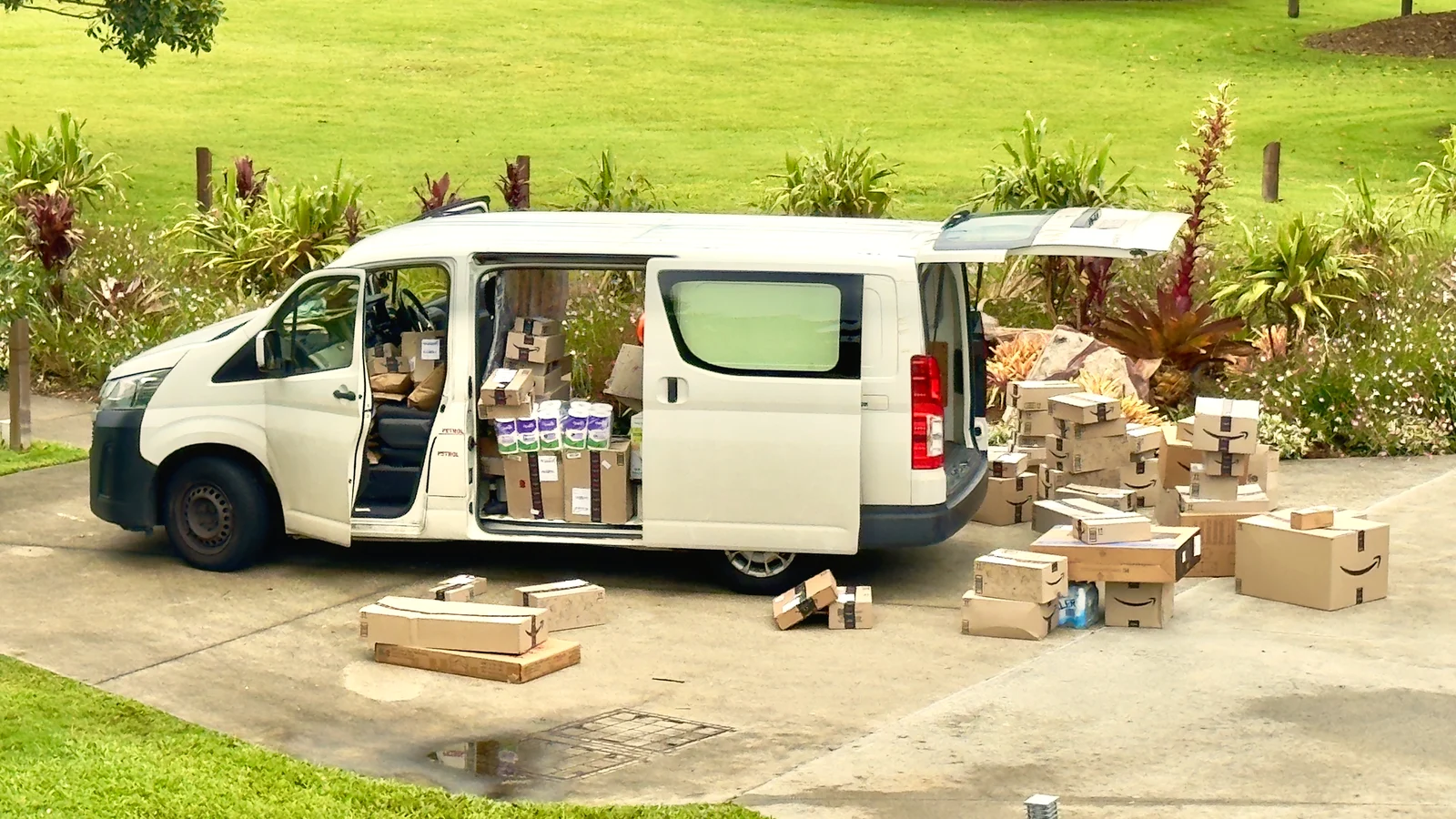
A store whose delivery is too slow loses 85% of its prospects to competitors. Keep that number in mind while you plan the customer experience. Online brands compete on it today, and they keep broadening what they offer to hold their audiences. Payment options and omnichannel improvements are the obvious levers, and brands pull them first. Shipping gets less attention, even though a well-built ecommerce shipping strategy can significantly improve how shoppers feel about buying from you.
Speed comes first
Buyers expect quick delivery already. Slow shipping is also among the biggest drivers of abandoned carts. Matching Amazon-level speed is needed for conversions: expedited delivery persuades 68% of shoppers to buy from an online store. Logistics and sales are strongly correlated.
Two-day delivery options alone won’t keep a store competitive. Sooner or later brands will need to deliver on the same day, if only for selected products and zones, and the ones that do already stand apart from their rivals. Fast, free shipping is affordable if you target the offer at your audience and work the cost into product prices or minimum order values.
How do you get there? Every step of fulfillment needs tuning. Start inside the company, with inventory and warehouse management. Orders that arrive in your store should go into processing immediately. Pickers and packers have to work quickly and accurately. If buyers are scattered across a wide territory, several distribution centers may be needed to reach them sooner.
Brands and providers with expedited services use technology at every stage. Automation handles order processing, picking ticket creation and inventory management, and IoT and mobile devices shorten pick and pack times.
Selling abroad adds complexity. Someone has to track bills of lading. Product pages and carts both need international shipping estimates. You need working relationships with the parties that move freight, plus tools for buying freight and last-mile delivery worldwide. The whole undertaking is technologically heavy. Strong partners and automation reduce friction for the operations managers running it and for the customers waiting on parcels.
Returns and lost customers
A weak returns policy may be eating away at your retention. Over 60% of customers dislike paying for returns processing, which includes shipping and packaging fees. The policy needs to be transparent and designed around the customer.
Many eCommerce brands avoid generous terms because of the cost. Even so, skipping free or near-free returns may do more harm than good. Improve your shipping processes to cut the number of return requests, and offer customer-first terms at the same time. Getting this right can lead to better profit, higher retention and a stronger reputation, in a market where return rates keep setting records.
A bad delivery drives buyers away as well: two-thirds of shoppers do not reorder from the brand that disappointed them. Which link in the supply chain actually failed means little to them. The brand gets the blame. Companies shipping internationally face significant exposure to this, and dropshipping businesses even more.
One overlooked source of support is the company that insures your international shipments. It can step in when packages are damaged or lost in transit. Many insurers also know partners that can help you limit damage, keep paperwork on file and sidestep the delays and replacements that hurt retention.
Fulfillment accuracy and the 3PL question
Delays, wrong orders and damaged packages are a bad trio for any customer, and many eCommerce brands run into them regularly.
You can fight back by tuning every stage of fulfillment. Good software, trained people and, when needed, an outside partner all help. Start with inventory software that generates picking tickets and works with the rest of your tools. Scanners help pickers get the right items: barcode readers are the basic option and RFID the more advanced one. Packing improves when box dimensions fit the product and dunnage holds it in place. Spreading inventory over a more diverse fulfillment network lifts shipping speeds and lowers costs. Together these steps make orders more accurate and the warehouse more efficient.
Outsourcing to a 3PL (third-party logistics provider) is the alternative, and the operational case for 3PL warehousing goes deeper into what it takes over. One that focuses on eCommerce can supply customer and order data, advise on packaging that cuts shipping costs, and give you control over how much inventory you must buy to meet demand. Check that its systems connect directly with overseas vendors, carriers, freight forwarders and the other partners you use. Together with those partners, a 3PL helps you build a global supply chain that reaches customers anywhere.
Look for a 3PL with a presence in both the origin and destination countries, so it can handle fulfillment tasks on both ends. Ask what it does to strengthen your ability to sell internationally, including whether its partners offer round-the-clock freight support.
Keeping buyers informed
At checkout, a real-time shipping cost calculation and short, clear returns and shipping policies make your terms visible before anyone commits. After the order ships, tracking updates take over. Some brands use SMS for live messages. Self-serve tracking pages that people open whenever they like are another route, and email alerts keep customers posted as well.
A tracking page with continuous updates shows buyers where their purchase stands, and good communication about shipping tackles multiple causes of cart abandonment. For satisfaction, the main job is living up to expectations and sticking to what you promised. Beyond that you can get creative: customized packaging gives a customer’s first unboxing something worth remembering.
International orders make the job bigger, because you have to follow a parcel from country to country until it reaches the door. Some platforms are able to follow it on behalf of both you and your buyers. A container tracking record covers the ocean leg before the parcel ever reaches a courier. Expect to combine several tools and plugins to build the tracking details and then share them.
Shoppers want an order’s status available at any moment. Ask carriers, freight forwarders, 3PLs and other partners for visibility into each leg, mode and handoff. The more you automate gathering this information and passing it on to buyers, the fewer tracking-related tickets reach your support team.
Promises and fraud
Beyond transparency, following through on what you have said is vital. If you advertise returns that are free and need no explanation, honor them. In the US the FTC’s Mail, Internet, or Telephone Order Merchandise Rule already requires sellers to have a reasonable basis for the shipping time they state and to notify buyers of delays. Long-term trust depends on it. Freight and shipping fraud belongs in the same conversation: dealing with it can ease a lot of customer worries, build trust and show where mistrust develops on each side of a purchase. If you are unsure where to begin, look at your shipping practices.
Where loyalty comes from
Everything above feeds customer loyalty: satisfaction, retention, fulfillment and trust together. Repeat purchases account for 43% of revenue, so a loyal customer base matters to any growing eCommerce brand. Loyalty tracks closely with the way consumers see your brand. They should find a business that is trustworthy, reliable and fair. Stronger branding contributes, and custom packaging is one example. So does fixing shipping problems fast and delivering a good experience.
Like every other part of running an online store, an ecommerce shipping strategy works best when it is designed around customers and the value they receive.
Frequently asked questions
How does shipping affect customer experience in ecommerce?
Delivery speed, the cost of returns, order accuracy and how well a buyer is kept informed all shape whether they come back. A bad delivery is blamed on the brand, whichever partner in the chain actually caused it.
Should an online store offer free returns?
Many brands avoid them because of the cost, but charging for returns is something most customers dislike. A practical route is to cut the number of returns with accurate fulfillment and better packing, then offer customer-first terms that the margin can carry.
When should an ecommerce brand use a 3PL?
When orders outgrow in-house picking and packing, or when buyers are spread over several countries. A 3PL with sites at origin and destination can handle fulfillment at both ends and share order data, as long as its systems connect to your carriers and forwarders.